The Truth About Electric Car Self-Charging: Dream vs. Reality
Imagine gliding down the highway in your electric vehicle, the battery magically refilling itself as you drive. No stops, no plugs, just endless, clean energy. This is the alluring promise of an electric car self-charging system. But how much of this vision is a reality today, and what’s still science fiction? The idea of a car that powers itself captures the imagination, suggesting a future free from range anxiety and charging stations.
While a truly perpetual motion machine remains a fantasy, several fascinating technologies are blurring the lines between driving and charging. These systems don’t create energy from nothing, but they are brilliant at capturing, converting, and topping up your battery in clever ways. In this guide, we’ll explore the real-world technologies that fall under the umbrella of “self-charging,” from the brakes on your current EV to the solar panels on a concept car’s roof. We will separate the marketing hype from the engineering facts, examine the physics involved, and look ahead to what the future of EV charging holds.
What Does Electric Car Self-Charging Really Mean?
The term electric car self-charging can be a bit misleading. It often conjures images of a vehicle that never needs to be plugged in, generating its own power indefinitely. This is, unfortunately, not possible due to the fundamental laws of physics, specifically the laws of thermodynamics. You can’t create energy out of thin air; you can only convert it from one form to another. When a car is moving, it has kinetic energy, and stopping that car turns that energy into heat through friction in traditional brakes.
In the context of modern EVs, “self-charging” refers to systems that recapture energy that would otherwise be wasted. The most prevalent and effective form of this is regenerative braking. Instead of just using brake pads to slow down, an EV can switch its electric motor into a generator. This process uses the car’s momentum to create electricity, which is then fed back into the battery pack. It’s not creating new energy, but rather recycling its own kinetic energy. Other emerging technologies, like integrated solar panels, also fit this description by harvesting external energy (sunlight) while the car is parked or driving. So, think of it less as “self-powering” and more as “energy scavenging.”
Debunking the Perpetual Motion Myth
The dream of a car that fuels itself is as old as the automobile. However, the concept of a perpetual motion machine—a device that can work indefinitely without an external energy source—has been debunked by centuries of scientific understanding. The First and Second Laws of Thermodynamics are the core reasons why a true electric car self-charging system is impossible. The first law states that energy cannot be created or destroyed, only transformed. The second law adds that with every energy conversion, some energy is inevitably lost as waste, usually as heat.
When an EV uses its battery to turn the wheels, energy is lost to air resistance, rolling friction from the tires, and heat in the motor and electronics. Even the most advanced regenerative braking system can’t recapture 100% of the kinetic energy when slowing down; some is always lost. Likewise, solar panels are not perfectly efficient at converting sunlight into electricity. Because of these unavoidable losses, a car cannot generate enough power to sustain its own movement indefinitely. Any energy it recaptures will always be less than the energy it spent to get moving in the first place. This is why, for the foreseeable future, your EV will always need an external power source, like the grid, to fully recharge.
Current “Self-Charging” Technologies in Practice
While a fully self-powering car isn’t feasible, several technologies already exist that contribute to a partial electric car self-charging experience. These systems are designed to supplement the main battery charge, extend range, and improve overall efficiency. They are clever engineering solutions that make EVs more practical and economical by scavenging energy that would otherwise be lost to the environment. From braking to sunshine, let’s explore the methods your car can use to give itself a little boost.
Regenerative Braking: The Original Self-Charger
Regenerative braking is the most common and effective form of electric car self-charging available today. It’s a standard feature on virtually every electric vehicle and hybrid. Here’s how it works: in a gas-powered car, when you press the brake pedal, brake pads clamp down on discs, creating friction to slow the car down. This process converts the car’s kinetic energy into waste heat. An EV does it differently. When you lift your foot off the accelerator or press the brake pedal, the electric motor that powers the wheels reverses its function. It becomes a generator.
The resistance from this generator effect slows the car down, and in doing so, it converts the car’s momentum back into electrical energy. This electricity is sent directly to the battery pack, adding a small amount of charge. The effect is most powerful in stop-and-go city driving, where frequent slowing and stopping provides constant opportunities to recapture energy. Many EVs allow drivers to adjust the strength of the regeneration, from a gentle coasting feel to a strong “one-pedal driving” mode where lifting off the accelerator is enough to bring the car to a complete stop without ever touching the brake pedal. While it won’t fully charge your car, it can significantly improve efficiency, sometimes extending your range by 15-20% or more depending on your driving style and terrain.
Solar Integration: Charging with Sunshine
Harnessing the power of the sun to charge a car is another exciting frontier. The idea of an electric car self-charging using solar panels integrated into its bodywork is simple and appealing. Cars spend a lot of time parked outside, and their roofs, hoods, and trunks offer a surprising amount of surface area. Companies like Lightyear and Sono Motors have developed vehicles where solar cells are seamlessly built into the car’s exterior panels. These panels continuously trickle-charge the battery whenever the car is exposed to daylight, whether it’s driving or parked.
However, the amount of power generated is modest. On a perfectly sunny day, a car covered in solar panels might generate enough electricity to add anywhere from 5 to 25 miles of range, depending on the panel efficiency and size. This isn’t enough to make the car independent of the grid, but it can be a significant bonus. For a commuter with a short daily drive, solar integration could mean they rarely need to plug in. In sunnier climates like California or Arizona, the benefits are even greater. It also helps power the car’s auxiliary systems, like air conditioning or infotainment, reducing the drain on the main battery. As solar cell technology becomes more efficient and cheaper, we can expect to see this feature become more common, even on mainstream models.
Wireless Charging: The Future of Convenience
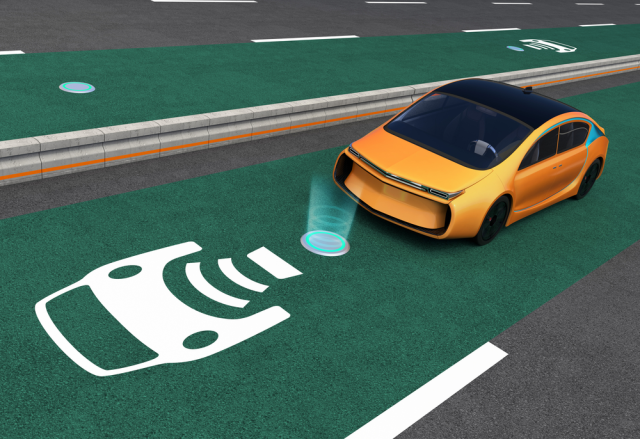
Wireless charging, also known as inductive charging, offers a glimpse into a future without cumbersome cables. This technology uses electromagnetic fields to transfer energy between two objects. For EVs, this means a charging pad is installed on the ground—in your garage, a parking spot, or even embedded in the road itself—and a corresponding receiver is fitted to the underside of the car. When the car is parked over the pad, charging begins automatically. This is a form of electric car self-charging in the sense that the driver takes no action; the process is seamless and autonomous.
This technology eliminates the hassle of handling heavy, dirty cables, which is a major convenience, especially in bad weather. It’s also a promising solution for drivers with mobility issues. The efficiency of stationary wireless charging is now very high, often rivaling traditional plug-in chargers. The next evolution is dynamic wireless charging, where charging coils are embedded directly into highways. This would allow EVs to charge as they drive, potentially leading to smaller, lighter batteries and nearly unlimited range on equipped roads. While this infrastructure is incredibly expensive to build out, pilot projects are already underway in several countries, showing the immense potential of this truly hands-free charging solution.
The Physics and Math: Why You Still Need to Plug In
Understanding why a true electric car self-charging vehicle is out of reach comes down to energy and efficiency. Let’s break down the numbers. Driving an average EV requires about 250 to 350 watt-hours (Wh) of energy per mile. To drive 40 miles, you’d need roughly 10-14 kilowatt-hours (kWh) of energy from your battery. Now, let’s look at what the “self-charging” technologies can give back.
Regenerative braking is the most efficient, but it only recovers energy already spent. Under ideal conditions, it might recapture up to 70% of the kinetic energy during a deceleration event. However, over a mixed driving cycle, the net gain to your range is more like 10-20%. It helps, but it doesn’t come close to offsetting the energy used to accelerate and cruise. Solar panels on a car roof might generate about 1 kWh of energy over an entire sunny day. That’s enough for about 3-4 miles of driving. It’s a nice bonus, but it would take a week of perfect sunshine to gather enough energy for a 25-mile commute. These systems are energy supplements, not primary sources. The energy required to overcome air resistance at highway speeds and the friction of the tires is simply too great to be replenished by these onboard generation methods alone.
A Comparison of “Self-Charging” Methods
To better understand the different technologies, it helps to compare them side-by-side. Each method has its own strengths, weaknesses, and ideal applications.
|
Technology |
How It Works |
Typical Power |
Pros |
Cons |
Best Use Case |
|---|---|---|---|---|---|
|
Regenerative Braking |
Motor acts as a generator, converting momentum into electricity. |
Up to 70 kW |
Standard on all EVs, improves efficiency, reduces brake wear. |
Only works when slowing down, can’t generate new energy. |
Stop-and-go city traffic, downhill driving. |
|
Solar Panels |
Photovoltaic cells on the car’s body convert sunlight into electricity. |
150 – 700 W |
Free, clean energy; charges when parked; reduces load on main battery. |
Low power output, dependent on weather, adds cost and weight. |
Sunny climates, for drivers with short commutes. |
|
Stationary Wireless |
An electromagnetic field transfers power from a ground pad to the car. |
7 – 22 kW |
Highly convenient, no cables, automatic. |
Requires precise alignment, expensive installation, not widely available. |
Home garages, dedicated public parking spots. |
|
Dynamic Wireless |
Charging coils embedded in the road charge the car as it drives over them. |
50 – 150 kW+ |
Enables continuous driving, could allow for smaller batteries. |
Extremely high infrastructure cost, not yet commercially available. |
Major highways and long-distance transportation corridors. |
The Role of Smart Charging Strategies
Since a completely hands-off electric car self-charging experience isn’t here yet, smart charging strategies are crucial for every EV owner. This means being strategic about when and where you plug in to save money, support the power grid, and maintain your battery’s health. Most charging (over 80%) happens at home overnight. This is not only convenient but also often the cheapest option. Many utility companies offer “Time-of-Use” (TOU) plans that provide significantly lower electricity rates during off-peak hours, typically late at night.
Modern EVs and home chargers can be programmed to start charging only when these cheap rates kick in. This simple step can cut your “fueling” costs by 50% or more. On the road, planning your trip with apps that show charging station locations and availability is key. Newer “Plug & Charge” technology further simplifies public charging. With it, you just plug the car in, and the station automatically identifies your vehicle and bills your account, eliminating the need for apps or credit cards. Combining these smart habits with the small gains from regenerative braking creates a seamless and cost-effective ownership experience.
Battery Health and Safety Considerations
The longevity of your EV’s battery is paramount, and it’s natural to wonder how different charging methods affect it. The core principle for battery health is managing heat and avoiding extremes. Constantly charging to 100% or letting the battery sit near 0% for long periods can accelerate degradation. Most experts, like those you might read about on knowledge hubs such as https://versaillesblog.com/, recommend keeping your daily charge between 20% and 80% for optimal lifespan.
Technologies like regenerative braking and solar integration are perfectly safe for the battery. They provide a low-current charge that is gentle on the battery cells. In fact, the frequent, small top-ups they provide are generally healthier than deep discharge and recharge cycles. When it comes to safety, all charging systems in modern EVs are designed with multiple redundancies and safety protocols. Whether you are using a standard plug, a DC fast charger, or a future wireless system, the car’s battery management system (BMS) constantly monitors temperature, voltage, and current to ensure everything operates safely. These systems will automatically slow down or stop charging if they detect any irregularity, protecting both the vehicle and its occupants.
The Bigger Picture: Grid Impacts and V2G
The concept of an electric car self-charging ecosystem extends beyond just the vehicle itself. As millions of EVs hit the road, they represent a massive, mobile energy storage network. This opens up incredible possibilities for stabilizing our electrical grid through technologies like Vehicle-to-Grid (V2G) and Vehicle-to-Home (V2H). With V2G, a parked and plugged-in EV can not only draw power from the grid but also send it back during times of high demand.
Imagine a heatwave where everyone turns on their air conditioners at 5 PM. Instead of firing up an expensive and polluting “peaker” power plant, the utility could draw a small amount of energy from thousands of connected EVs. Car owners would be compensated for providing this service, earning money while their car is parked. V2H works on a similar principle but on a local scale. During a power outage, your EV’s battery could power your home’s essential appliances for hours or even days. This turns your car into a backup generator that is silent, emission-free, and readily available. This two-way energy flow transforms the EV from a simple consumer of electricity into an active, valuable participant in the energy grid.
Future Innovations in Electric Car Self-Charging
The quest for a more convenient and efficient electric car self-charging experience is driving incredible innovation. One of the most promising developments on the horizon is the solid-state battery. These batteries replace the liquid electrolyte in today’s lithium-ion batteries with a solid material. This could lead to batteries that are not only safer (non-flammable) but also have higher energy density, meaning more range in a smaller, lighter package. They also promise much faster charging speeds, potentially adding hundreds of miles of range in just 10-15 minutes.
Dynamic wireless charging, or “electric roads,” is another game-changing concept being tested in places like Sweden, Michigan, and Italy. While the cost is a major hurdle, success in these pilot programs could pave the way for electrifying major trucking routes first, and eventually, public highways. Imagine long-haul electric trucks that never need to stop to charge, or road trips where your car’s battery level actually increases as you drive on the interstate. These technologies, combined with ever-improving solar cells and smarter software, paint a future where the act of charging becomes an afterthought rather than a chore.
Key Takeaways
- A true electric car self-charging system that never needs a plug is not possible due to the laws of physics.
- “Self-charging” in EVs refers to technologies that recapture or harvest energy, like regenerative braking and solar panels.
- Regenerative braking is the most effective form, recycling the car’s momentum to add a small charge back to the battery, significantly improving city driving efficiency.
- Solar panels on cars can add a few miles of range per day, reducing the need to plug in for those with short commutes in sunny areas.
- Future technologies like dynamic wireless charging on highways could one day allow EVs to charge while driving, but this requires massive infrastructure investment.
- Smart charging strategies, like using off-peak electricity rates at home, remain the most practical way to save money and manage your EV’s energy needs.
Frequently Asked Questions (FAQ)
1. Is there any car that can charge itself completely?
No. No production car can fully charge itself without being plugged into an external power source. The energy required to move the car is always greater than what can be recaptured through regenerative braking or solar panels due to energy losses from friction, air resistance, and heat.
2. How much range can I really get from regenerative braking?
This depends heavily on your driving style and environment. In stop-and-go city traffic with lots of braking, regenerative systems can improve your overall range by 15-25%. On a steady highway cruise with minimal braking, the benefit is much smaller.
3. Are “self-charging hybrids” a real thing?
The term “self-charging hybrid” is a marketing phrase used for standard hybrid vehicles (HEVs) that do not plug in. These cars have a small battery that is charged by the gasoline engine and regenerative braking. You cannot drive them on electricity alone for long distances; their primary energy source is always gasoline.
4. Are solar panels on an EV worth it?
It depends. In a very sunny climate, solar panels might add over 1,000 miles of free range per year. For a driver in a cloudy region or someone who parks in a garage, the benefit is minimal and may not justify the added cost of the feature.
5. When will we have roads that charge cars as they drive?
Dynamic wireless charging is still in the experimental and pilot-project phase. While the technology works, the cost of embedding charging coils into thousands of miles of roadway is enormous. Widespread implementation is likely decades away and will probably start with dedicated lanes for commercial trucks and buses.
6. Does regenerative braking wear out the motor?
No, the process of using the motor as a generator is a designed function and does not cause premature wear. In fact, by using the motor to slow down, you significantly reduce wear and tear on your conventional friction brakes, saving money on maintenance over the life of the car.
7. Can I add wireless charging to my current EV?
There are some aftermarket companies developing kits to add stationary wireless charging to existing EVs. However, these are not yet widely available or standardized. In the future, it will likely become a factory-installed option on more vehicles.













Post Comment